
Short sessions, in order, written down
Nothing here is exotic. It works because it is sequenced properly and because you keep a record of what actually happened.
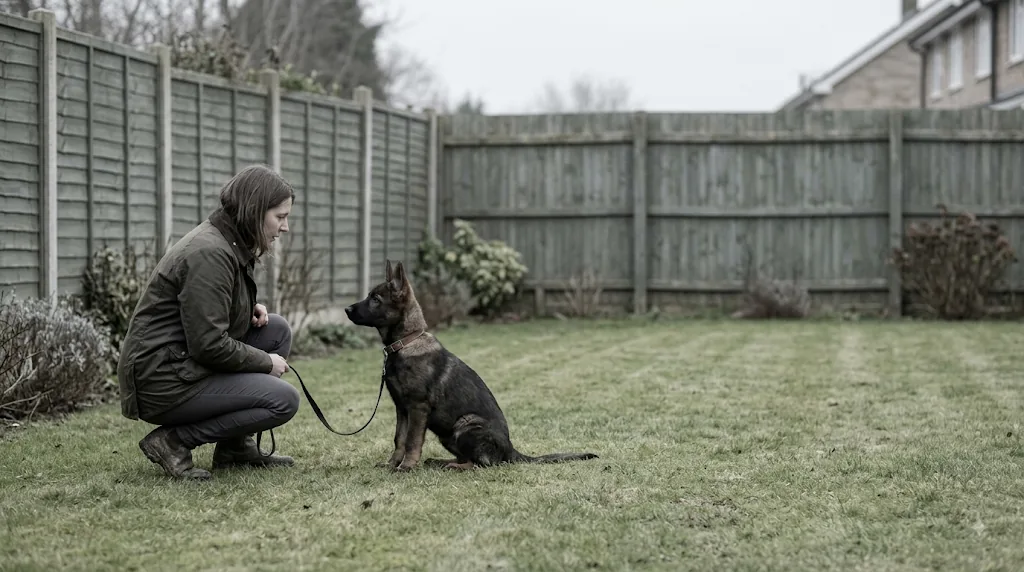
One lesson teaches one thing
Every lesson covers a single skill and follows the same shape, so you always know where to look: what you are teaching and why, exactly how to teach it step by step, the key points that decide whether it works, what to do and what never to do, what to do when it goes wrong, and how you know the dog has genuinely learned it rather than merely performed it once in the kitchen.
The order is the method
Lessons are numbered and sequential because the sequence is doing real work. Recall is taught before off-leash freedom. Marker timing is taught before the marker is used to shape anything. Handling and consent are taught before you ever need to take something out of a puppy's mouth. Skipping ahead is the most common way people end up with a dog that knows a dozen commands and listens to none of them.
You are free to read ahead, and the health and first-aid material is deliberately available from anywhere the moment you enroll. But the training path itself expects to be walked in order.
Repetition is the actual work
Reading a lesson takes fifteen minutes. Teaching the skill takes weeks, in sessions of about five minutes, several times a day. The Academy is built around that asymmetry: the lesson gives you a practice plan and mastery criteria, and the journal is where you record each session — how long, how many reps, where you were, how much was going on around you, and how it went.
After a fortnight the journal starts answering questions no memory can: whether the skill only works in the back yard, whether progress stalled the week the weather changed, whether you are training too long and ending on failure.
Complete is not the same as mastered
A lesson can be marked complete when you have worked through it, and mastered when the dog meets the proofing criteria — the stated standard for distance, duration and distraction. Those are two different marks on purpose. Completion measures you; mastery measures the dog.
Each dog starts fresh; you do not
Handler tracks are recorded against you and stay earned. Dog tracks are recorded against a specific dog. Add a second dog in three years and its training path starts at the beginning, while everything you learned about timing, reading stress and running a session carries straight over.